Dye Penetrant Inspection
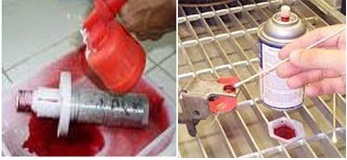
Dye penetrant inspection (DPI), also called liquid penetrant inspection (LPI) or penetrant testing (PT), is a widely applied and low-cost inspection method used to locate surface-breaking defects in all non-porous materials (metals, plastics, or ceramics).
Materials & Defect Detection Capabilities
The penetrant may be applied to all non-ferrous materials and ferrous materials; although for ferrous components magnetic-particle inspection is often used instead for its subsurface detection capability. LPI is used to detect casting, forging and welding surface defects such as hairline cracks, surface porosity, leaks in new products, and fatigue cracks on in-service components.
Broad Material Range
Applicable to all non-porous materials including non-ferrous metals, ferrous alloys, plastics, and ceramics.
Flaw Detection Scope
Detects fine hairline cracks, surface porosity, pinholes, laps, seams, and surface voids with high sensitivity.
Manufacturing Integrity
Critical evaluation of raw castings, forgings, machined fabrications, and structural weldments.
In-Service Maintenance
Reveals leaks in newly fabricated items and locates cyclic fatigue cracking on operational in-service parts.
Surface Preparation & Pre-Cleaning
The test surface is cleaned to remove any dirt, paint, oil, grease or any loose scale that could either keep penetrant out of a defect, or cause irrelevant or false indications.
The end goal of this step is a clean surface where any defects present are open to the surface, dirt, and free of contamination.
Common Surface Cleaning Methods:
Ferrous vs. Non-Ferrous Material Consideration
While Dye Penetrant Inspection (DPI) is effective across non-porous metals, plastics, and ceramics, for ferrous components Magnetic Particle Inspection (MT) is frequently utilized when subsurface detection capability is specifically required. DPI remains the gold standard for non-magnetic alloys such as stainless steels, aluminum, brass, and titanium.